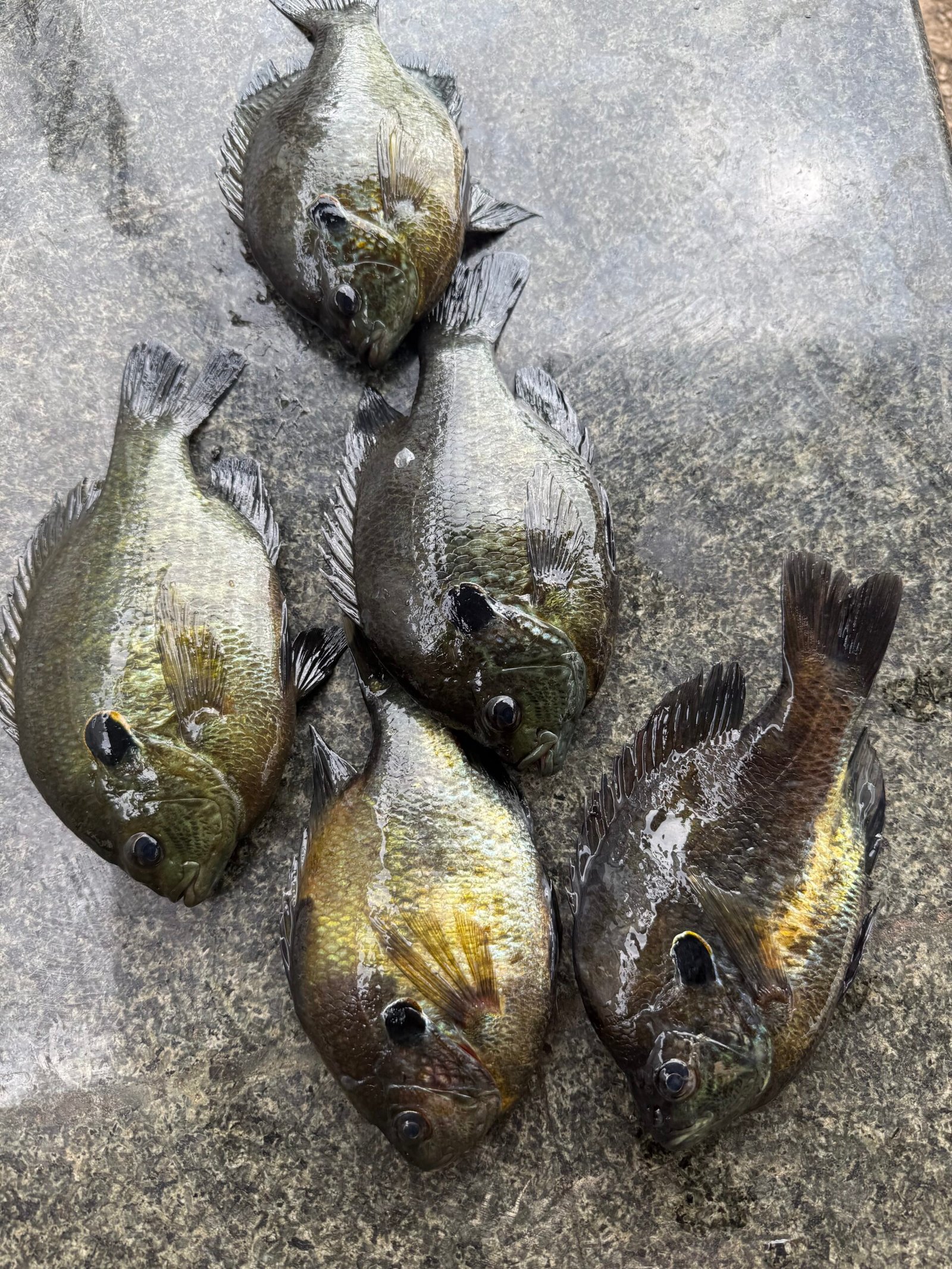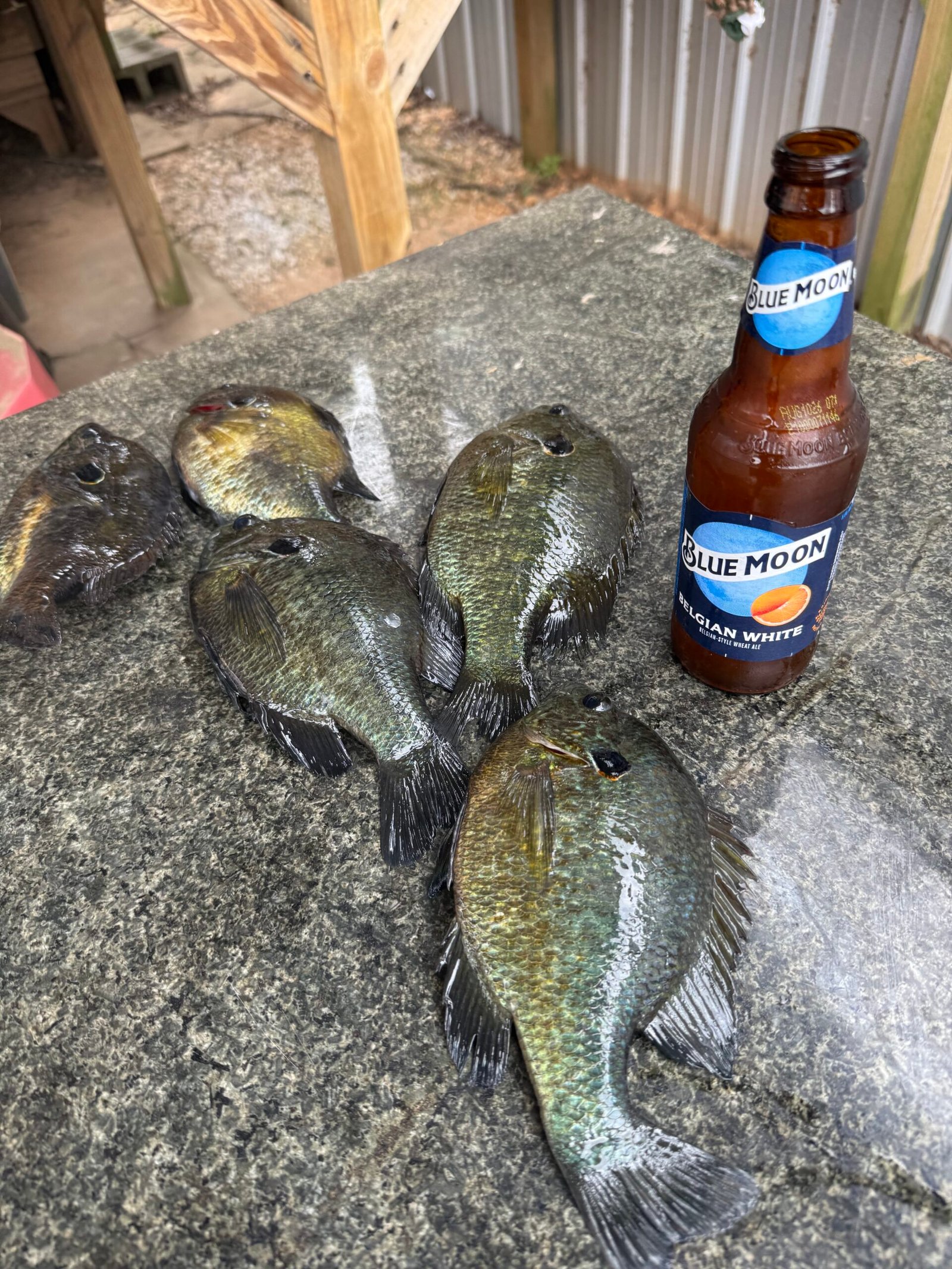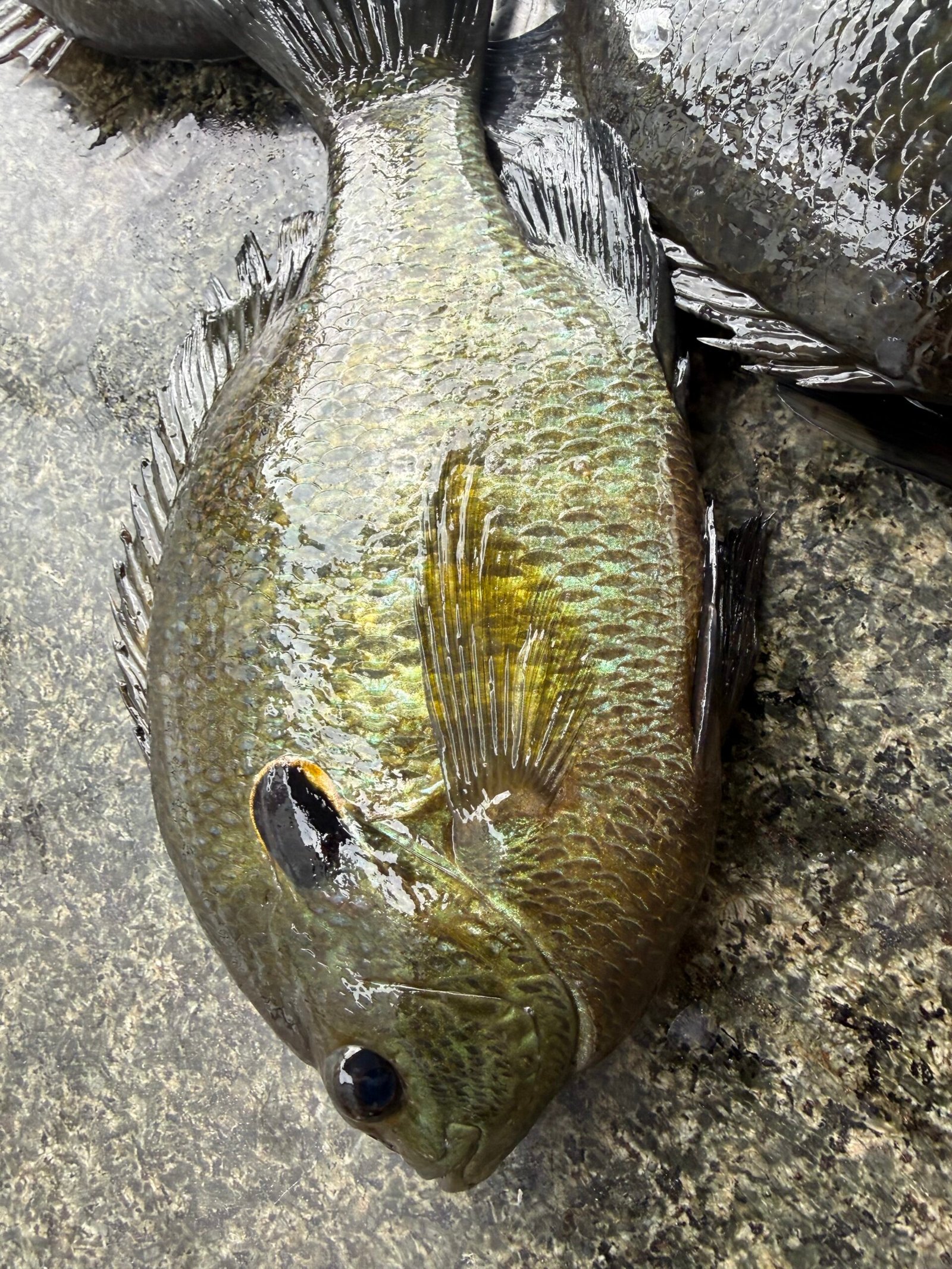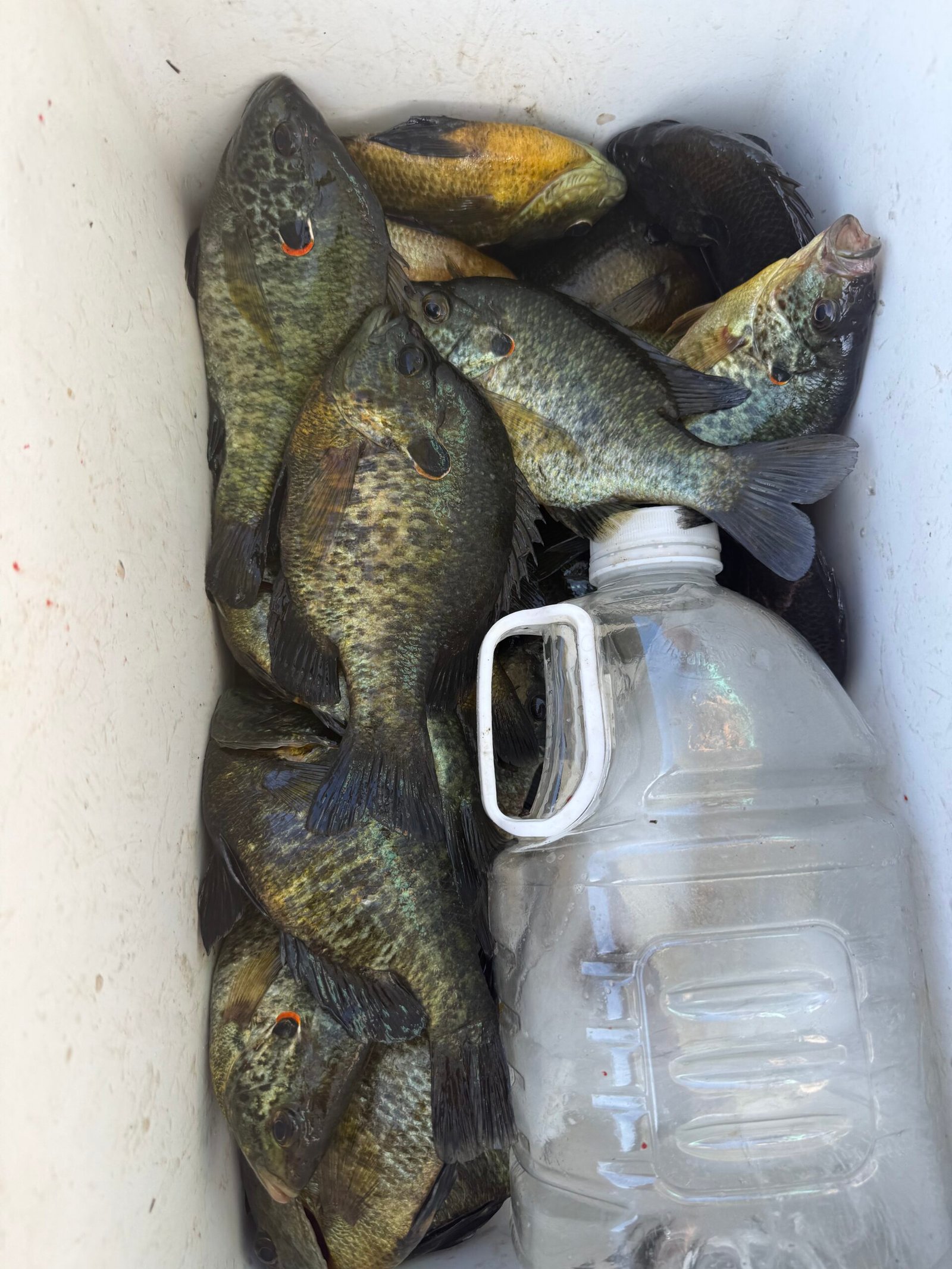

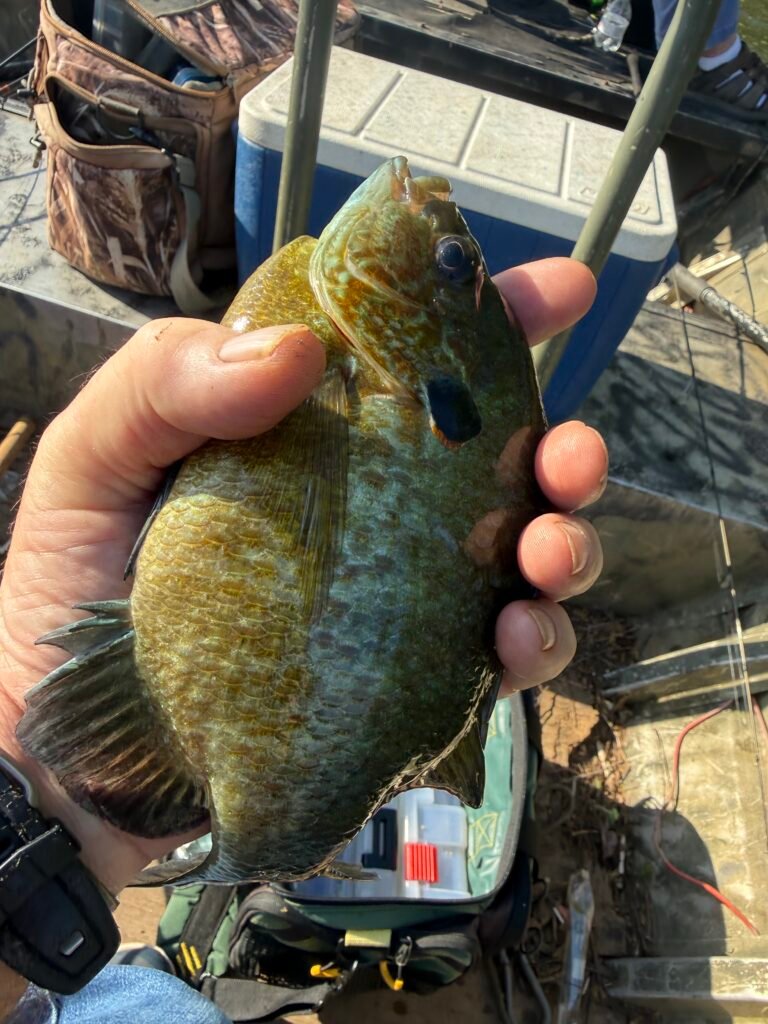
When I say that most people miss it, it is not because they are gone. Quite the contrary it is because most people miss the spawn and may not understand their feeding habits. But once you do, you can fill a cooler with these tasty, hard-fighting fish.
Redears typically spawn here in North Louisiana when the water temperature is between 68 and 75 degrees. Most importantly, peak activity is centered around the first full moon in April. It is this full moon that many people miss. As a rule of thumb: the full moon in March coincides with crappie spawning (57–64 degrees), the full moon in April with redear spawning (68–75 degrees), and the full moon in May with bluegill spawning (70–80 degrees).
While redears and bluegills are often caught together, the early full moon in April can lead to concentrated catches of big redears. How big? Well, the Lake Havasu record is slightly over six pounds. The Louisiana state record is 2.87 pounds, caught at Caney Creek Lake, where, notably, 8 of the top 10 largest specimens have come from. If you can imagine catching a 2-plus-pound bream that fights pound for pound as hard as any freshwater fish if not harder then redears are worth your time to search for.
Targeting redears can be a bit different from targeting bluegills, as they have an affinity for small mollusks, hence the name “shellcrackers.” They often feed near the bottom, looking down, and keeping a bait close to the bottom can yield significantly larger catches. Bluegills, on the other hand, often feed while looking up.
Top baits for redears include many of the same baits used for bluegills: nightcrawlers, red worms, Catalpa worms, and more. One exception is baby crawfish, which redears feed heavily on and rarely turn down. An hour or so spent with a fine-mesh net in roadside ditches, dipping them up, is time well spent if you’re targeting these great game fish.
Another proven, time-tested method is to move steadily down a bank and around cypress groves using an ultralight spinning rod tipped with a small Beetle Spin or a curly-tail grub. My favorite is a 1/16- or 1/32-ounce black hair jig with a black curly-tail grub. Once you find them, expect vicious, hard strikes that will make an old fat man giggle like a girl.
On a recent trip this past April, every fish caught over two days had small crawfish in its stomach, if that tells you anything about their preferred bait. Redears have another quirk you can watch for: when they take a bait, they often just turn the cork on its side, leading you to believe that small fish are playing with it, only for you to set the hook and find a 16-ounce or larger redear on the end of the line.
Top spots in North Louisiana to catch redears include Black Bayou at Hosston, one of my personal favorites; Caney Lake, where 8 of the 10 largest fish have come from; Lake Bistineau, which is also known for producing large fish; Caddo Lake; and Toledo Bend, particularly Teneha Creek. In South Louisiana, large catches come from False River and Old River. I’m sure there are more you just have to look for them in April.
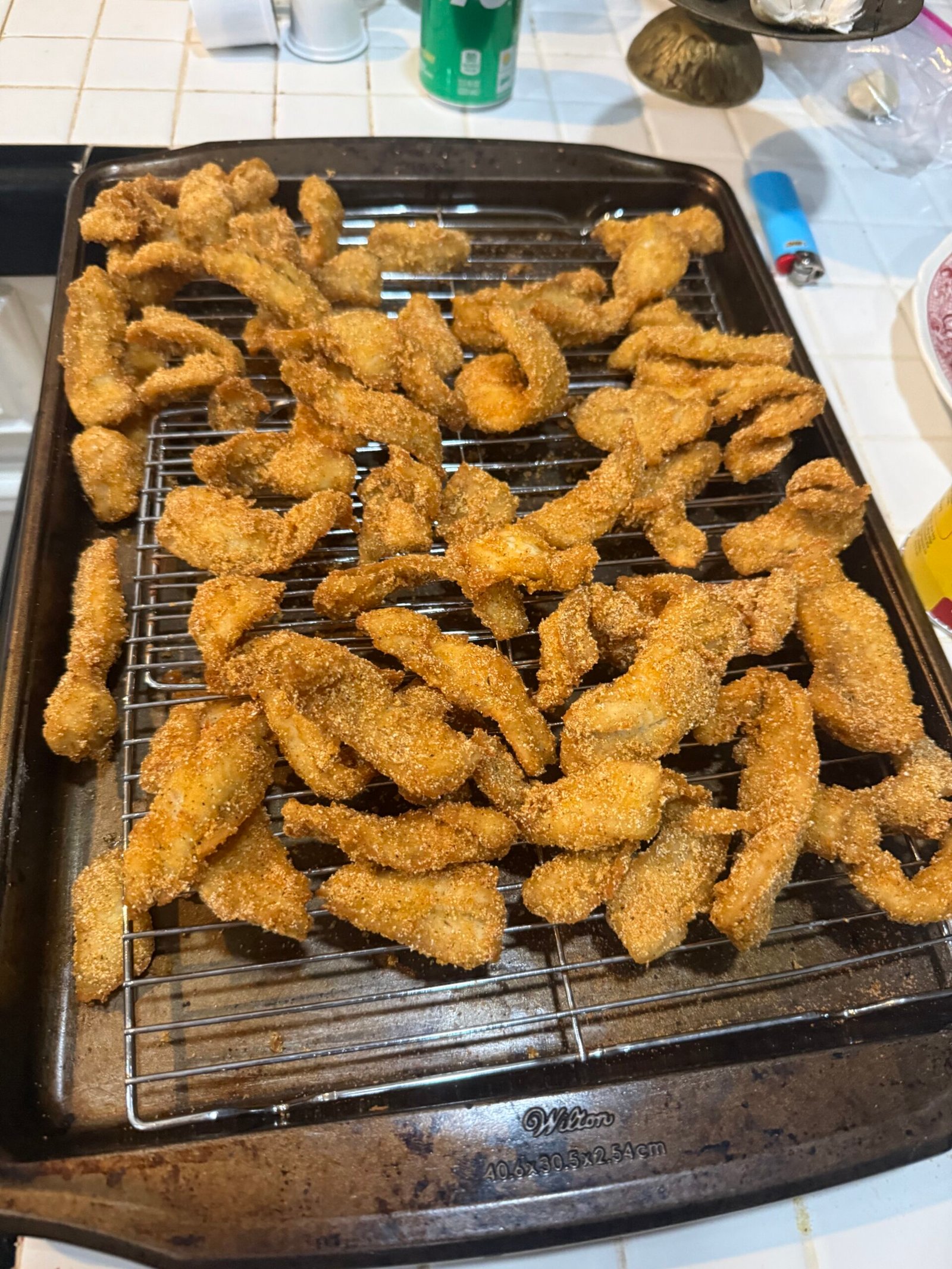
And, oh, on the table, whether fried whole or filleted as depicted below, there is nothing better!